


In a rotary vane vacuum pump, the vanes rotate continuously along with the rotor, facilitating the processes of intake, compression, and exhaust within the pump chamber. Consequently, the material of the vanes not only determines their own durability but also influences friction, operational performance, and the fit between the vanes, the rotor, and the pump chamber.
Among the available replacement parts for vacuum pumps, both Kevlar and graphite are common material options for rotary vanes; however, they possess distinct material properties and operational characteristics. When replacing vacuum pump vanes, users should not rely solely on the material name; instead, they must consider the specific pump model, operating conditions, and the specifications of the original vanes to make an informed choice.
What is the difference between Kevlar vanes and graphite vanes?
The primary difference between Kevlar vanes and graphite vanes stems from the materials themselves.
Kevlar vanes generally offer superior mechanical strength and wear resistance, making them well-suited for operating environments where the vanes are subject to continuous reciprocating motion and frictional contact. In rotary-vane vacuum pumps, the vanes must constantly move within the rotor slots while maintaining close contact with the pump chamber walls; therefore, the mechanical properties and frictional characteristics of the material are critical.
Graphite vanes, by contrast, possess the inherent properties of graphite-namely, excellent self-lubrication and high-temperature resistance. Consequently, they are often used in vacuum pump applications that impose specific requirements regarding friction, temperature, or material stability.
Ultimately, these two materials are not simply interchangeable alternatives. The selection process should be guided by the original material specified for the vacuum pump, the pump's structural design, and the actual operating conditions of the equipment.
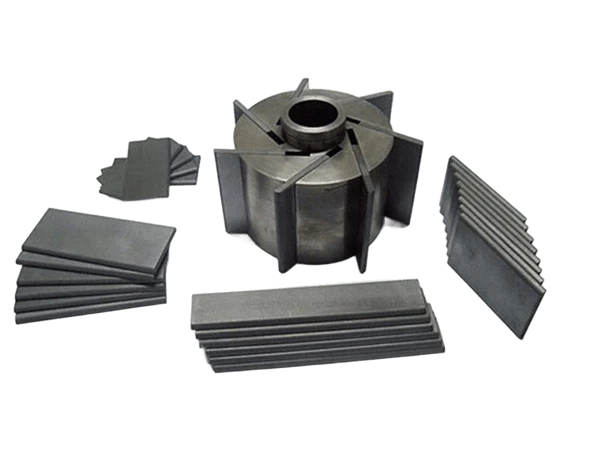
Wear Resistance Performance
During the operation of a rotary-vane vacuum pump, the vanes move continuously within the rotor slots while maintaining contact with the inner wall of the pump chamber. As the equipment runs, the contact surfaces of the vanes are subject to constant friction; therefore, their wear resistance directly influences their service life and the frequency with which they need to be replaced.
Kevlar vanes generally offer excellent mechanical strength and wear resistance, making them well-suited for applications involving continuous rotation and repetitive motion. In practice, one should monitor the vane edges, contact surfaces, and overall dimensions for any significant changes.
The wear resistance of graphite vanes depends on the specific composition of the graphite material, the vane structure, and the actual operating conditions. While graphite possesses favorable frictional characteristics, the extent of wear is not determined solely by the material itself; it is also influenced by factors such as pump rotational speed, operating temperature, duration of use, and the condition of the pump chamber.
For vacuum pumps that operate continuously over long periods, attention should be focused on the following aspects:
- Wear on the contact surfaces between the vanes and the pump chamber
- Significant wear along the edges of the vanes
- Changes in the dimensions of the vanes
- Abnormal wear marks within the rotor slots
- Any shifts in the operating sound or overall performance of the vacuum pump
Consequently, when comparing Kevlar vanes and graphite vanes, it is not advisable to draw a simplistic conclusion as to which material is "more wear-resistant." A more sound approach is to evaluate which material best aligns with the original design requirements of the equipment, taking into account the specific pump model and operating conditions.

Temperature conditions
Vacuum pumps generate heat during operation; when running continuously for extended periods, the pump housing, rotor, and vanes are all affected by the operating temperature. For equipment that operates for long durations or at high temperatures, the thermal tolerance of the vane material is a critical consideration.
Graphite vanes offer excellent high-temperature resistance, making them a valuable choice for applications with specific thermal requirements. However, it is important to note that while graphite itself is heat-resistant, this does not mean that every vane made from graphite is suitable for a high-temperature vacuum pump.
In practice, the following factors must be taken into account:
- The normal operating temperature of the vacuum pump
- The duration of continuous operation
- The rotational speed of the rotor
- The gases and working media present within the pump
- The thermal conditions of the vanes in relation to other components
For Kevlar vanes, suitability must be verified based on the specific material composition and technical specifications of the product. Simply knowing that a vane is made of Kevlar is insufficient-especially for equipment that runs continuously for long periods-as one must confirm that the specific component is rated for the operating temperature range of the vacuum pump in question.
Therefore, if your equipment operates under significant high-temperature conditions, it is advisable to first verify the original design parameters of the vacuum pump and the specifications of the original vane material. Only then should you determine whether graphite vanes-or an alternative material-are appropriate, rather than relying solely on the material name when selecting a replacement.
Mechanical motion
The vanes in a rotary-vane vacuum pump are components subject to continuous motion. As the rotor spins, the vanes move within the rotor slots, maintaining contact with the pump chamber wall-a process driven by centrifugal force and the geometry of the pump chamber.
During a single full rotation, each vane undergoes a continuous sequence of positional changes:
Rotor rotation → movement of the vane within the rotor slot → maintenance of contact with the pump chamber wall → variation in the working chamber volume → compression and discharge of gas.
Consequently, the vanes must not only possess the appropriate material properties but also be capable of enduring sustained mechanical motion.
Kevlar vanes generally offer high mechanical strength, making them suitable for rotary-vane vacuum pumps that involve continuous motion. In equipment operating at high frequencies, it is essential to monitor whether the vanes exhibit significant wear or dimensional changes over long periods of operation.
Graphite vanes can also be used in certain rotary-vane vacuum pumps; however, graphite and Kevlar differ in their mechanical characteristics. Therefore, when using graphite vanes, one must verify that they are compatible with the specific rotor design and the operational requirements of the vanes.
From the perspective of replacement, key factors related to mechanical motion include:
- Vane dimensions: The length, width, and thickness must match the specifications of the original vanes.
- Number of vanes: Different rotor designs require varying numbers of vanes; this cannot be determined solely by the external appearance of the pump.
- Rotor slot configuration: The vanes must be able to move freely and correctly within the rotor slots; dimensions that are either too large or too small can impede operation.
- Pump chamber fit: The vanes must maintain an appropriate working fit with the pump chamber wall-a critical factor in determining the suitability of a replacement vane.
Ultimately, when evaluating the performance of Kevlar versus graphite vanes, the focus should not be on which material is inherently "better" for motion, but rather on ensuring compatibility between the material, the vane structure, and the specific design of the vacuum pump.
How to choose between Kevlar Vanes and Graphite Vanes?
When selecting vacuum pump vanes, it is best to begin by examining the existing vacuum pump and its current vanes, rather than deciding on a specific material first.
Start by identifying the brand and specific model of the vacuum pump. Rotary vane vacuum pumps can vary significantly between brands and models in terms of rotor configuration, the number of vanes used, and the dimensions of those vanes.
Next, verify the specifications of the original vanes, including their length, width, thickness, and mounting method. Providing the original part number or photographs of the existing vanes can also help ensure an accurate match.
Additionally, consider the actual operating conditions of the equipment, such as:
- Daily operating hours of the vacuum pump
- Operating temperature
- Frequency of use
- Working medium (the substance being pumped)
- Requirements for vane wear resistance
- The material of the vanes originally used in the pump
If the equipment currently uses graphite vanes, it is generally not advisable to switch to Kevlar vanes without first confirming compatibility-and the same applies in the reverse scenario. Different materials offer distinct performance characteristics and may also necessitate adjustments to vane dimensions, fit, or the internal design of the pump.
Are Kevlar vanes and graphite vanes interchangeable?
This is a common issue encountered when replacing vacuum pump vanes.
The answer cannot be a simple "yes" or "no."
Even if the dimensions of the vanes are identical, it does not necessarily mean that different materials are interchangeable. A vacuum pump is often designed with a specific vane material in mind-accounting for the fit between the vanes, the rotor slots, and the pump chamber, as well as the friction and temperature conditions experienced during operation.
Therefore, when considering a change in material, you must verify the following:
Vacuum pump model → Original vane specifications → Vane material → Operating conditions → Actual compatibility
For maintenance or parts replacement, relying on the original equipment model and the original vane specifications is generally more reliable than simply comparing two different materials.
Conclusion
Kevlar vanes and graphite vanes each possess distinct material characteristics, and they are not necessarily interchangeable across all vacuum pumps or operating conditions. Kevlar vanes are particularly notable for their mechanical strength, wear resistance, and suitability for continuous motion, whereas graphite vanes offer advantages such as self-lubrication, low friction, and high-temperature resistance.
When it comes to procurement or replacement, the priority is not to determine which material is "better" in an absolute sense, but rather to ensure that the chosen material is well-suited to the specific design and operating conditions of your vacuum pump.
If you are looking for Kevlar vanes, graphite vanes, or other components for rotary vane vacuum pumps, please contact Hilo Pump. By providing details such as the vacuum pump brand, model, original vane dimensions, or part numbers, we can help you identify the most appropriate vanes for your specific requirements.


