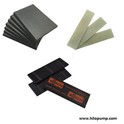
As a supplier of Becker Pump Vanes, I'm frequently asked about the materials used in their production. Understanding the materials is crucial as it directly impacts the performance, durability, and suitability of the vanes for different applications. In this blog, I'll delve into the various materials that Becker Pump Vanes are made of, exploring their properties, advantages, and typical use - cases.
Carbon - A Popular Choice for Becker Pump Vanes
Carbon is one of the most commonly used materials for Becker Pump Vanes. Carbon vanes, such as the Carbon Vane 90133400007 For Becker DVT3.140 Pump, offer several significant advantages.
First and foremost, carbon has excellent self - lubricating properties. In a pump, the vanes are in constant contact with the pump chamber walls, and friction can lead to wear and tear. The self - lubricating nature of carbon reduces this friction, minimizing the need for additional lubricants in some cases. This not only simplifies the pump's operation but also reduces the risk of contamination that can occur with lubricating oils.
Carbon is also highly resistant to chemical corrosion. Many industrial applications involve pumping corrosive gases or liquids. Carbon vanes can withstand exposure to a wide range of chemicals, making them suitable for use in harsh chemical environments. For example, in the chemical processing industry, where pumps are used to handle acids, alkalis, and other corrosive substances, carbon vanes ensure long - term reliability.
Another advantage of carbon vanes is their low density. A lower density means less inertia, allowing the vanes to respond quickly to changes in the pump's operating conditions. This results in improved pump efficiency, especially in high - speed applications. The lightweight nature of carbon vanes also reduces the load on the pump's motor, potentially leading to energy savings over time.
However, carbon vanes do have some limitations. They are relatively brittle compared to some other materials. In applications where there are high - impact forces or sudden pressure changes, carbon vanes may crack or break. Therefore, they are typically used in applications where the operating conditions are relatively stable.
Composite Materials
Composite materials are also increasingly being used in the manufacturing of Becker Pump Vanes. These materials are engineered by combining two or more different materials to achieve specific properties.
One common type of composite used for pump vanes is a combination of carbon fibers and a resin matrix. The carbon fibers provide high strength and stiffness, while the resin matrix binds the fibers together and protects them from environmental damage. This combination results in vanes that are both strong and lightweight.
Composite vanes offer enhanced mechanical properties compared to pure carbon vanes. They can withstand higher impact forces and are more resistant to fatigue. This makes them suitable for applications where the pump operates under variable loads or in high - vibration environments. For example, in the automotive industry, where pumps are used in various systems such as fuel injection and air conditioning, composite vanes can provide reliable performance.
Composite materials can also be tailored to have specific thermal properties. By selecting the appropriate resin and fiber combination, the thermal expansion coefficient of the composite can be controlled. This is important in pumps, as temperature changes can cause dimensional changes in the vanes. If the thermal expansion is not properly managed, it can lead to poor pump performance or even damage to the pump.
The manufacturing process for composite vanes is more complex than that for carbon vanes. However, the benefits they offer in terms of performance and durability often justify the additional cost.
Metal Alloys
In some cases, metal alloys are used to make Becker Pump Vanes. Metal vanes, such as those made from stainless steel or bronze alloys, have their own set of unique properties.
Stainless steel vanes are known for their high strength and excellent corrosion resistance. They can withstand high - pressure applications and are suitable for use in pumps that handle abrasive or corrosive fluids. For example, in the mining industry, where pumps are used to transport slurries containing solid particles, stainless steel vanes can resist the wear caused by the abrasive particles.
Bronze alloys are another popular choice for metal vanes. Bronze has good self - lubricating properties and is relatively soft compared to stainless steel. This makes bronze vanes suitable for applications where quiet operation is required. The softness of bronze also allows it to conform to the pump chamber walls, improving the seal and pump efficiency.


However, metal vanes are generally heavier than carbon or composite vanes. This can increase the load on the pump's motor and reduce the overall efficiency, especially in high - speed applications. Metal vanes are also more prone to corrosion in certain chemical environments if not properly protected.
The Role of Heat Sink Radiators
When considering the materials used in Becker Pump Vanes, it's also important to mention the role of heat sink radiators, such as the Heat Sink Radiator for Becker Air Pump Or Oil Pump. During the operation of a pump, the vanes generate heat due to friction. If this heat is not dissipated effectively, it can lead to thermal expansion of the vanes, reduced performance, and even premature failure.
Heat sink radiators are designed to absorb and dissipate the heat generated by the vanes. They are typically made of materials with high thermal conductivity, such as aluminum or copper. These materials can quickly transfer the heat away from the vanes, keeping the pump operating at an optimal temperature.
Service Kits
Service kits, like the Service Kits 56650054200 For Becker Pump U5.70 U5.100, are an important part of maintaining Becker pumps. These kits often include replacement vanes along with other essential components such as seals and gaskets.
The materials used in the service kits are carefully selected to ensure compatibility with the pump and the vanes. For example, the seals in the service kit are made of materials that can withstand the same chemical and thermal conditions as the vanes. This ensures that the entire pump system operates smoothly and reliably.
Choosing the Right Material
Selecting the right material for Becker Pump Vanes depends on several factors. The nature of the fluid or gas being pumped is a critical consideration. If the medium is corrosive, carbon or composite vanes may be the best choice. If the medium contains abrasive particles, stainless steel vanes may be more suitable.
The operating conditions of the pump, such as pressure, temperature, and speed, also play a role in material selection. High - pressure applications require vanes with high strength, while high - speed applications benefit from lightweight materials.
Cost is another important factor. Carbon vanes are generally more affordable than composite or metal alloy vanes. However, in applications where performance and durability are of utmost importance, the higher cost of composite or metal vanes may be justified.
Contact for Procurement
If you are in the market for Becker Pump Vanes or related service kits, I encourage you to reach out. As a supplier, I have in - depth knowledge of the different materials and can help you choose the most suitable vanes for your specific application. Whether you need carbon vanes for a chemical processing pump or composite vanes for an automotive application, I can provide you with high - quality products and excellent service. Contact me to start a procurement discussion and ensure that your pumps operate at their best.
References
- "Materials Science and Engineering: An Introduction" by William D. Callister Jr. and David G. Rethwisch
- "Pump Handbook" by Igor J. Karassik, Joseph P. Messina, Paul Cooper, and Charles C. Heald